
Top 5 Open-Source ChatGPT Replacements April 2025

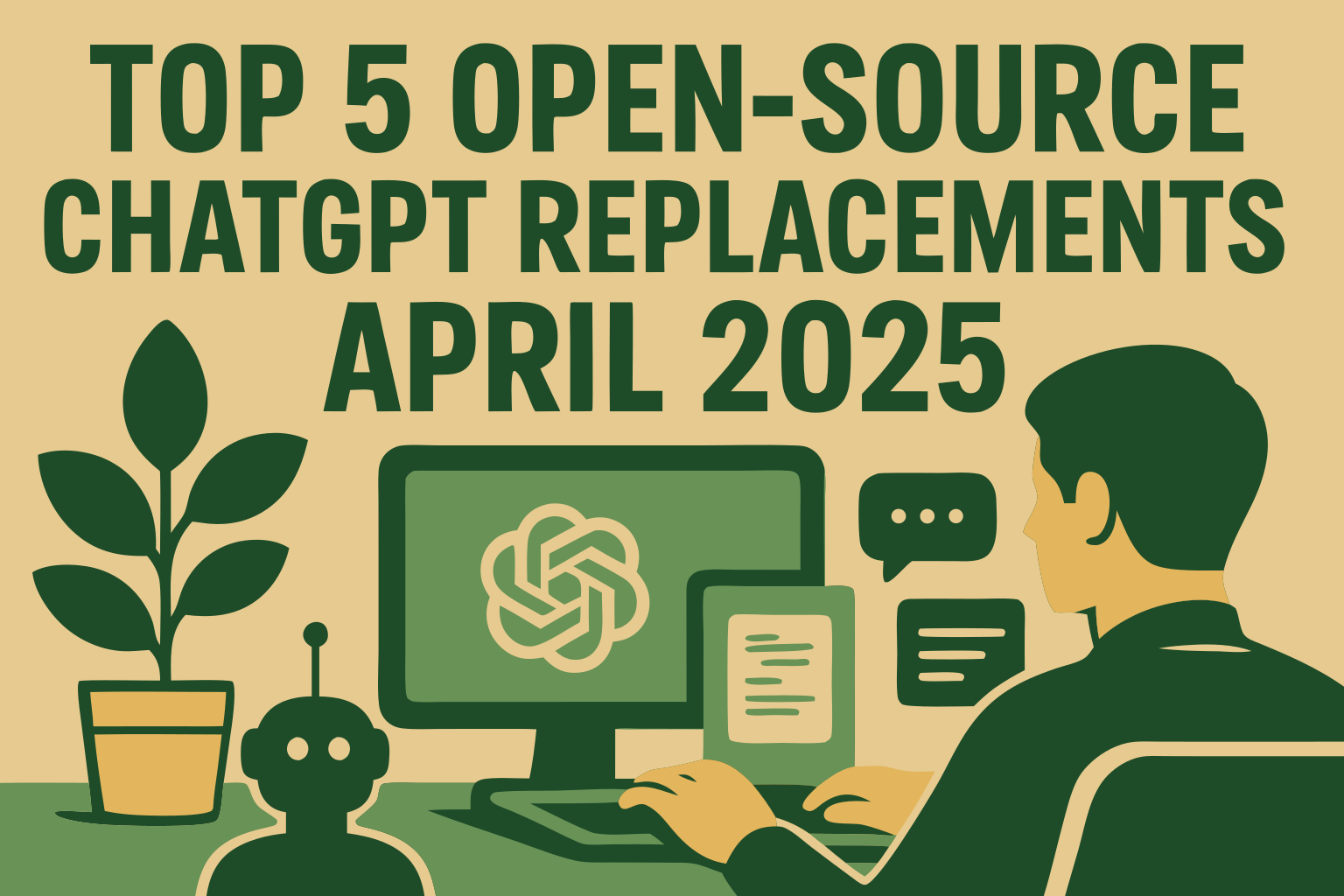
Top 5 Open-Source ChatGPT Replacements (April 2025)
Open-source ChatGPT UI replacements have exploded in popularity, offering privacy, flexibility, and advanced agentic features that rival or surpass the official ChatGPT web app. Whether you want to self-host, integrate local LLMs, or build custom AI agents, these platforms provide robust alternatives for individuals, teams, and enterprises.
This guide presents the top 5 open-source ChatGPT UI replacements with agent capabilities, based on active development, feature set, model support, and community adoption. A list of honourable mentions follows for those seeking specialized or lightweight solutions.
What Makes a Great Open-Source ChatGPT Replacement?
Key criteria for selection:
- Open-source license and active development
- Self-hosted deployment (Docker, desktop, or cloud)
- Support for multiple LLM providers (OpenAI, Anthropic, APIpie, local models, etc.)
- Agentic features: tool use, function calling, RAG, plugin systems, or multi-agent orchestration
- User-friendly, modern UI with customization options
- Community support and documentation
The Top 5 Platforms
1. LibreChat
Overview:
LibreChat is a polished, open-source ChatGPT clone that unifies multiple AI backends under a familiar, user-friendly interface. It supports multi-user sessions, advanced context management, and enterprise features like OAuth2 authentication and moderation.
Agent Capabilities:
- No-code Agent Builder for custom AI assistants with tools and files
- Built-in agents for document Q&A, code interpretation, and plugin-like tool use
- Supports OpenAI function calling, external APIs, and ChatGPT plugins
Model Support:
OpenAI, Azure, Anthropic, Google, HuggingFace, local endpoints (Ollama), and more
Deployment:
Docker, Node.js, or Helm charts; active community and frequent updates
Best For:
Teams and individuals seeking a powerful, extensible ChatGPT UI with agent and plugin support
2. AnythingLLM
Overview:
AnythingLLM is an all-in-one chat application focused on chatting with your own documents and knowledge bases, while supporting general ChatGPT-style conversations.
Agent Capabilities:
- No-code Agent Builder for custom agents with tool use
- Retrieval-Augmented Generation (RAG) for document Q&A
- Modular workspaces for specialized agents and multi-user management
Model Support:
Local runners (llama.cpp, Ollama, NeMo), OpenAI, Azure, Anthropic, Cohere, HuggingFace, OpenRouter, and more
Deployment:
Desktop app (Windows/Mac/Linux), Docker, or server mode; easy setup and active development
Best For:
Users who want to chat with custom data, run local or cloud models, and build specialized agents
3. Open WebUI
Overview:
Open WebUI is a self-hosted, extensible chat platform designed for offline-first operation and multi-model orchestration.
Agent Capabilities:
- Plugin “Pipelines” for web search, document retrieval, and custom Python tools
- Function calling API for tool use and agent extension
- Multi-model and multi-agent orchestration in a single UI
Model Support:
Ollama, OpenAI-compatible APIs, LMStudio, GroqCloud, Mistral, and more
Deployment:
Docker, pip, or Kubernetes; responsive web UI with admin controls
Best For:
Power users and enterprises needing advanced orchestration, plugin support, and offline/local model integration
4. LobeChat
Overview:
LobeChat is a modern, SvelteKit-based chat platform with a sleek UI, modular architecture, and strong focus on extensibility.
Agent Capabilities:
- Function call plugin system and Agent Marketplace for community plugins
- Knowledge base integration (vector store memory)
- Artifacts system for rich outputs (images, graphs, etc.)
Model Support:
OpenAI, Anthropic, Gemini, Groq, Ollama, DeepSeek, Qwen, and custom endpoints
Deployment:
One-click Vercel deploy, Docker, or serverless; easy customization and frequent updates
Best For:
Users who value aesthetics, plugin ecosystems, and multi-modal interactions
5. Chatbot UI
Overview:
Chatbot UI is a clean, open-source chat interface supporting both local and cloud-based models, with a focus on simplicity and accessibility.
Agent Capabilities:
- Sleek, intuitive UI for multi-model chat
- Database-backed storage, multimodal input, and RAG support
- Extensible for developers and casual users alike
Model Support:
ChatGPT, Claude, Gemini Pro, Ollama, DeepSeek, and more
Deployment:
Desktop (Windows, Mac, Linux), mobile (iOS, Android), and web
Best For:
Anyone seeking a straightforward, self-hosted ChatGPT alternative with broad model support
Honourable Mentions
- GPT4All (Nomic): Desktop chat client for local LLMs, fully offline, with document Q&A.
- Oobabooga Text Generation Web UI: Flexible web UI for running LLMs locally, with extensive extension support.
- Hugging Face Chat UI: SvelteKit-based UI for HuggingFace Hub models and local APIs, with plugin and function calling support.
- Chatbox: User-friendly AI chat client supporting multiple models, both online and offline.
- Ollama UI: Minimal web UI for interacting with Ollama servers, supporting local and remote models.
Conclusion
The open-source ecosystem for ChatGPT UI replacements is thriving, with platforms like LibreChat, AnythingLLM, Open WebUI, LobeChat, and Chatbot UI leading the way in agentic features, model flexibility, and user experience. Whether you need advanced orchestration, document Q&A, or a simple chat interface, these projects offer robust, privacy-friendly alternatives to proprietary solutions.
As AI models and agent frameworks continue to evolve, expect even more powerful, customizable, and user-centric chat platforms to emerge—putting the future of conversational AI firmly in your hands.
APIpie.ai: Unlock AI Solutions with Our Unified API
Unlock powerful AI capabilities with APIpie.ai's unified API. Optimize performance and costs while focusing on your creative projects today!
Top 10 Open-Source AI Agent Frameworks of May 2025
Explore the leading open-source AI agent frameworks including AG2, LangGraph, CrewAI, OpenAI Agents SDK, and more. Compare features, architecture styles, and find the right framework for your AI project.