

Understanding Vector Databases in AI

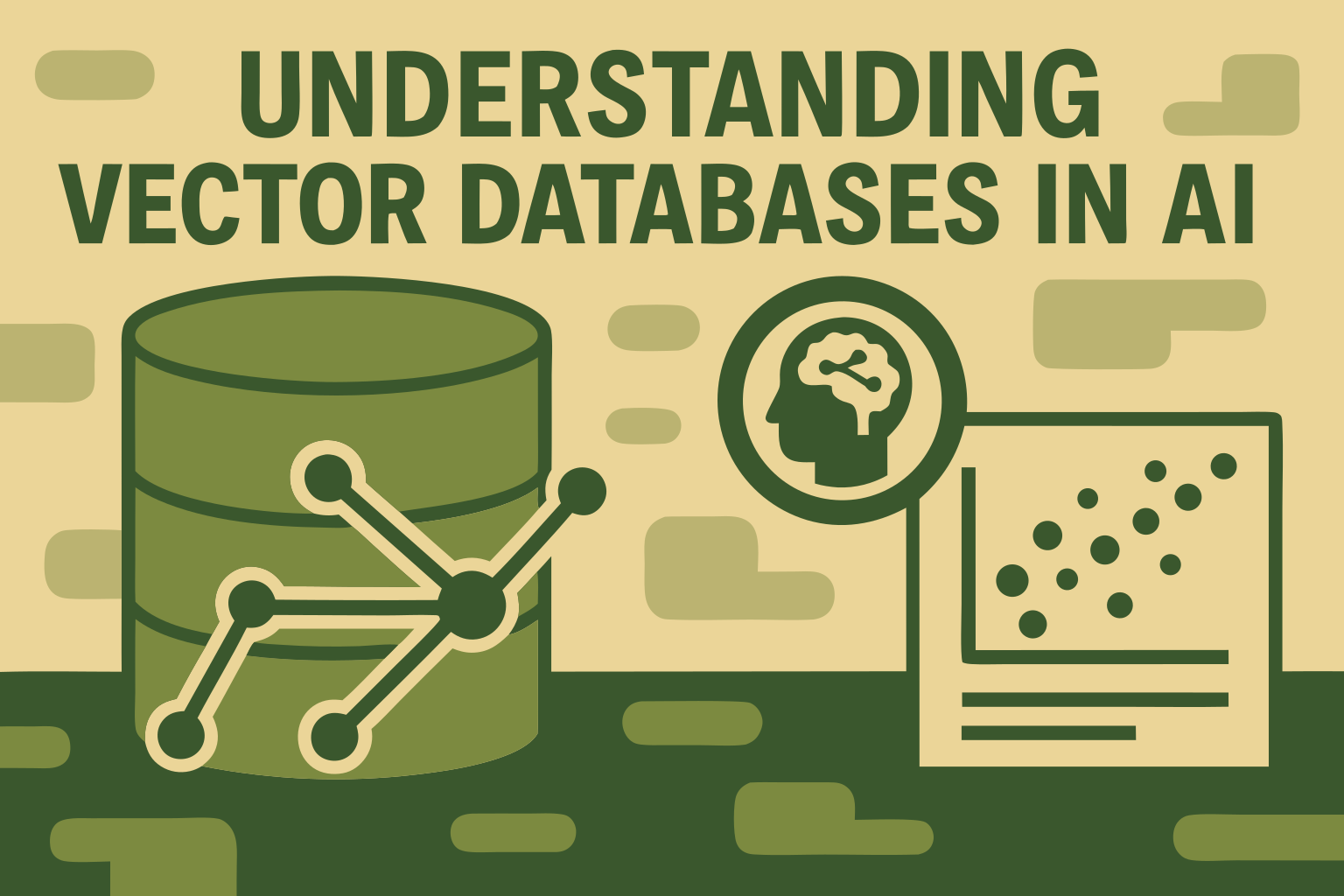
Have you ever wondered how Netflix knows exactly what show to recommend next?(or at least tries to) Or how Spotify creates those perfectly curated playlists? Behind these seemingly magical recommendations lies a powerful technology: Vector Databases. In today's AI-driven world, these specialized databases are revolutionizing how we store, search, and understand data.
What Makes Vector Databases Special?
Imagine trying to find a specific painting in an art gallery, but instead of looking at titles or artists, you're searching for "something that feels like a sunny day at the beach." Traditional databases would struggle with such a request, but vector databases excel at understanding these kinds of semantic relationships.
Vector databases are like highly organized art galleries that understand not just what something is, but what it means. They store data in a way that captures relationships and similarities, making it possible to find content based on meaning rather than exact matches.
The Magic Behind Vector Databases
At their core, vector databases work by converting information into numbers, lots of numbers. Here's how:
- Converting Data to Vectors
- Your text, images, or audio get transformed into long lists of numbers
- These numbers (vectors) capture the essence of the content
- Similar content gets similar number patterns
- Finding Similar Items
- When you search, the database looks for vectors with similar patterns
- It's like finding songs that "sound similar" (Think Shazam though they use a hashing algorithm) or articles that "feel related"
- This happens incredibly fast, even with millions of items
Real-World Applications That'll Blow Your Mind
1. Content Discovery
Imagine you're on YouTube watching a video about making pasta. The platform instantly suggests related cooking videos—not just based on tags or titles, but on the actual content and style of the videos. That's vector databases at work!
2. E-commerce Recommendations
Ever noticed how Amazon shows you products similar to what you're viewing? Vector databases help find items that are visually or functionally similar, even if they're described differently.
3. AI-Powered Knowledge Bases (RAG)
Ever noticed how ChatGPT sometimes gets facts wrong? That's where RAG (Retrieval-Augmented Generation) comes in. Vector databases help AI systems find and use relevant information from your documents, making responses more accurate and up-to-date. It's like giving AI a perfect memory of your company's knowledge!
4. Fraud Detection
Banks use vector databases to spot unusual transaction patterns by comparing them with known fraud cases, protecting your money in real-time.
The Major Players in the Vector Database World
Let's meet the stars of the show:
Pinecone: The Enterprise Favorite
- Cloud-native and ready for serious business
- Handles millions of searches per second
- Perfect for production applications
- Check out our Pinecone integration
Milvus: The Open Source Champion
- Free and community-driven
- Supports both CPU and GPU
- Great for customization
Weaviate: The Developer's Friend
- GraphQL interface makes it familiar
- Built-in AI capabilities
- Perfect for mixed data types
Qdrant: The Speed Demon
- Built for performance
- Flexible filtering options
- Self-hosted or cloud-based
Why Should You Care About Vector Databases?
Vector databases are becoming essential because they:
- Make Search Smarter
- Find what you mean, not just what you type
- Understand context and relationships
- Work with any type of content
- Scale Effortlessly
- Handle millions of items
- Stay fast as you grow
- Adapt to your needs
- Enable New Possibilities
- Power recommendation systems
- Enable visual search
- Support AI applications
Getting Started is Easier Than You Think
With APIpie.ai's integration, you can start using vector databases in minutes. Here's a simple example:
# Create a collection
curl -X POST 'https://apipie.ai/v1/vectors' \
-H 'Authorization: YOUR_API_KEY' \
--data '{"collectionName": "my-first-collection"}'
The Future is Vectorized
Vector databases are transforming how we interact with data. They're making applications smarter, searches more intuitive, and recommendations more accurate. As AI continues to evolve, vector databases will become even more crucial for businesses wanting to stay competitive.
What's Next?
- More sophisticated search capabilities
- Better performance and efficiency
- Enhanced multimodal support
- Deeper AI integration
Ready to Transform Your Applications?
Vector databases are no longer just for tech giants—they're accessible to businesses of all sizes. Whether you're building a recommendation system, improving search functionality, or developing AI applications, vector databases can give you the edge you need.
👉 Want to get started with vector databases? Visit APIpie.ai and explore our vector database solutions.
Join the growing community of developers and businesses using vector databases to create smarter, more intuitive applications. The future of data is here—are you ready to be part of it?
Understanding AI APIs with APIpie.ai
Complete guide to understanding AI APIs, their evolution, and integration. Learn about different types of AI APIs, key features, and how to leverage them for business applications.
Understanding RAG (Retrieval Augmented Generation)
Want smarter, more accurate AI responses? See how RAG gives AI a perfect memory by letting it check facts in real-time! Simple guide with examples.